Cecil Atkission Ford Del Rio

Blog / Used Vehicle Guides

How to Choose a Used SUV That Balances Power, Space & Savings

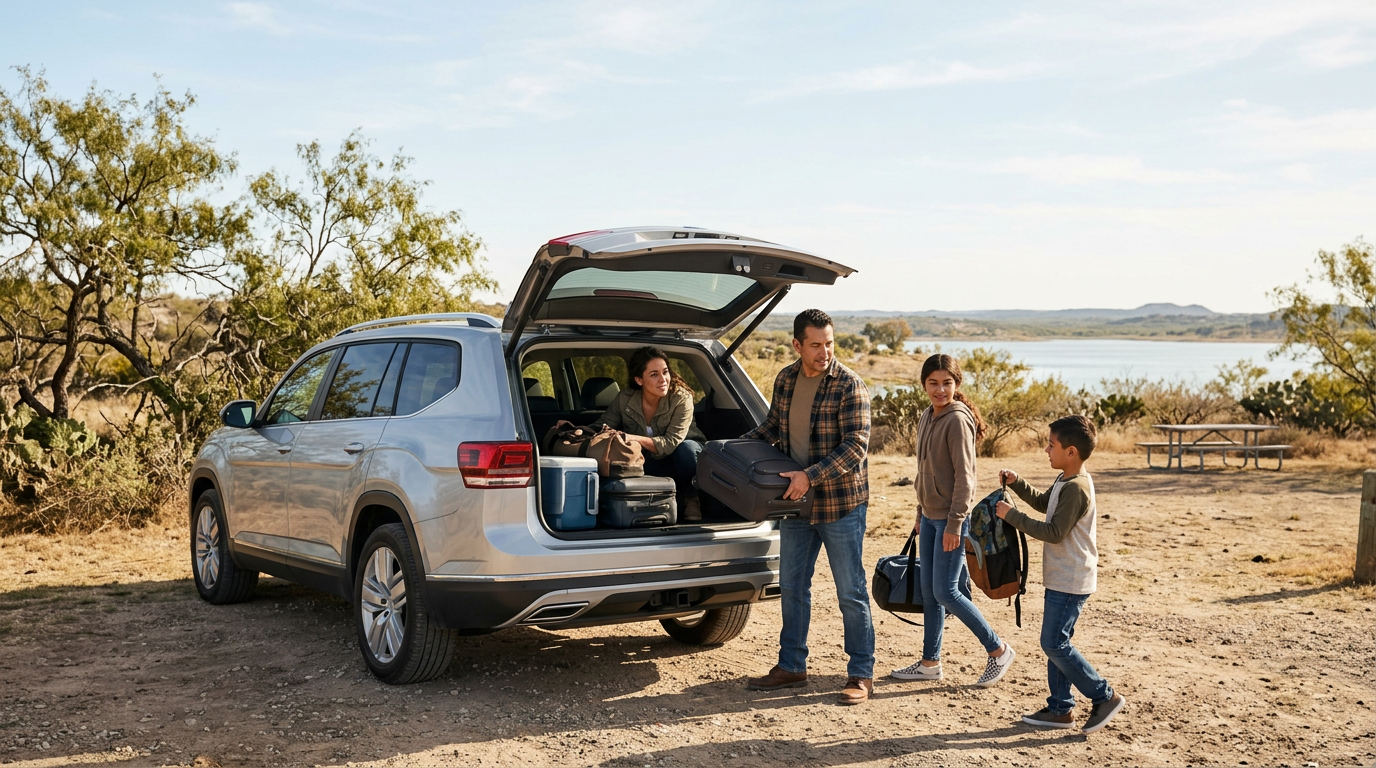
 Family loading luggage into the trunk of a silver SUV outdoors near a scenic lake. (Representative image for illustration purposes only. Actual vehicle may vary based on trim and configuration.)

Finding the best fit depends on seating requirements, towing needs, and total ownership costs. A pre-owned Ford Explorer delivers maximum value for families needing three rows and up to 5,000 pounds of towing capacity. Buyers requiring maximum passenger seating or heavy trailer capability benefit from a full-size Ford Expedition, while full-size alternatives like the Chevrolet Suburban command higher upfront market prices.

Choosing a pre-owned utility vehicle requires balancing immediate purchase pricing with long-term operational costs. Midsize three-row crossovers represent the sweet spot for many growing families. Vehicles in this class feature car-like unibody construction, providing balanced handling on highway commutes alongside sensible fuel economy. Pre-owned models equipped with a 2.3L EcoBoost four-cylinder engine deliver 300 hp while keeping weekly fuel expenditures manageable.

For households managing larger families, frequent carpools, or heavy towing duties, full-size body-on-frame SUVs provide necessary muscle and interior volume. A full-size SUV utilizes a truck chassis designed to support heavy tongue weights and full passenger loads without straining mechanical components. While higher initial price points reflect these heavy-duty frames, the long-term durability pays dividends over years of ownership.

Our team at Cecil Atkission Ford Del Rio helps buyers evaluate total value rather than just initial sticker prices. We provide complete vehicle reports and transparent pricing on every model on our lot. You can browse our pre-owned vehicle selection online, drop by our Del Rio location, or give our sales specialists a quick call at (830) 320-3106 to discuss current options reliable for your work and family life.

Table of Contents

Comparing Seating Capacity and Cargo Space: Explorer, Expedition, and Suburban

The Ford Explorer seats up to seven passengers with 16 cubic feet of cargo space behind the third row, expanding to about 86 cubic feet with rear seats folded. The full-size Ford Expedition seats up to eight with roughly 21 cubic feet behind row three, while extended full-size models like the Chevrolet Suburban offer 41 cubic feet of rear storage with all seats upright.

Interior layout determines how comfortably your vehicle handles daily routines and family road trips. The Ford Explorer provides flexible seating arrangements across its three rows. Base and mid-level trims typically feature a second-row bench seat for seven-passenger capacity. Higher trims offer second-row captain's chairs, reducing total seating to six while creating a center walkthrough corridor. This passage makes accessing the third row easier for children, even when child safety seats remain installed in row two. Cargo space behind the third row holds daily groceries or backpacks, while folding both rear rows flat creates a massive flat floor for hauling larger cargo.

The full-size Ford Expedition increases cabin width and legroom significantly. Accommodating up to eight adult passengers across three spacious rows, the Expedition ensures third-row passengers enjoy legitimate legroom rather than tight emergency seating. Behind the third row, 21 cubic feet easily holds full-sized luggage for weekend getaways to Amistad Reservoir. For maximum space, extended-length body styles like the Expedition MAX expand total cargo volume up to 123 cubic feet behind the front seats, offering massive utility for family equipment.

The Chevrolet Suburban sits at the top of the full-size footprint spectrum. As an extended-length full-size SUV, it provides 41 cubic feet of cargo room even with all three rows occupied by passengers. However, this extra space comes with a significantly larger overall footprint, making tight parking spaces and garage fitment more challenging compared to midsize options. Families weighing daily maneuverability against maximum cargo capacity frequently discover that the balanced dimensions of a Ford crossover or full-size SUV fit standard residential garages while fulfilling routine hauling demands. Shoppers interested in brand-new utility models can also explore our current new Expedition inventory to compare dimensions in person.

Dimensions & Capacity

Capacity and dimensions by trim

Feature Active 4WD Active 4WD 100A Active RWD Active RWD 100A Platinum Platinum 4WD
Seating 6 6 6 6 6 6
Cargo 16.3 cu ft 16.3 cu ft 16.3 cu ft 16.3 cu ft 16.3 cu ft 16.3 cu ft
Curb weight 4,303 lbs 4,303 lbs 4,303 lbs 4,303 lbs 4,303 lbs 4,303 lbs
Towing 5,000 lbs 5,000 lbs 5,000 lbs 5,000 lbs 5,000 lbs 5,000 lbs
Payload 1,467 lbs 1,467 lbs 1,467 lbs 1,467 lbs 1,467 lbs 1,467 lbs

Dimensions & Capacity (continued)

Feature ST ST 4WD ST-LINE 4WD ST-LINE RWD Tremor 4WD Utility Police Interceptor 4x4
Seating 6 6 7 7 6 7
Cargo 16.3 cu ft 16.3 cu ft 16.3 cu ft 16.3 cu ft 16.3 cu ft 52.0 cu ft
Curb weight 4,631 lbs 4,631 lbs 4,303 lbs 4,303 lbs 4,424 lbs 4,732 lbs
Towing 5,000 lbs 5,000 lbs 5,000 lbs 5,000 lbs 5,000 lbs 3,500 lbs
Payload 1,139 lbs 1,139 lbs 1,467 lbs 1,467 lbs 1,346 lbs 2,108 lbs


Powertrains and Towing: Expedition EcoBoost V6 vs Suburban V8 Fuel Economy and Explorer Towing Packages

The Ford Expedition twin-turbo EcoBoost V6 delivers up to 24 mpg highway while maintaining strong towing capabilities, outperforming traditional naturally aspirated V8 engines in the Chevrolet Suburban that generally average 1 to 2 mpg lower on highway routes. For midsize towing, a pre-owned Ford Explorer reaches its maximum 5,000-pound rating when equipped with the factory Class III Trailer Tow Package.

Powertrain engineering directly impacts both fuel efficiency and pulling power. The Ford Expedition relies on a 3.5L EcoBoost V6 paired with a 10-speed SelectShift® automatic transmission. By utilizing twin turbochargers, this V6 generates strong low-end torque rivaling larger V8s while maintaining better efficiency when cruising unloaded. On open stretches connecting rural communities, the EcoBoost engine delivers smooth passing power and an EPA-estimated 16 mpg city / 24 mpg highway rating on rear-wheel-drive models. In contrast, the standard 5.3L V8 engine found in used Chevrolet Suburbans requires higher engine revolutions to reach peak torque, typically resulting in slightly lower highway fuel economy during long commutes.

When properly configured, towing performance across these family SUVs easily supports recreation and work trailers:

  • Ford Explorer: Standard 2.3L EcoBoost four-cylinder producing 300 hp and 310 lb-ft of torque, or available 3.0L EcoBoost V6 boasting 400 hp and 415 lb-ft of torque. Maximum towing reaches 5,000 pounds when configured with the factory-installed Class III Trailer Tow Package, which includes frame hitch wiring and enhanced engine cooling.
  • Ford Expedition: Standard 3.5L EcoBoost V6 providing 380 hp to 400 hp and up to 480 lb-ft of torque. When equipped with the Heavy-Duty Trailer Tow Package, maximum towing capacity reaches up to 9,600 pounds on select Four-wheel drive configurations.
  • Chevrolet Suburban: Standard 5.3L V8 or available 6.2L V8, offering towing ratings typically ranging between 7,500 pounds and 8,300 pounds depending on axle ratios and tow packages.

For drivers navigating the rolling hills around Uvalde, having dedicated transmission cooling and trailer sway controls provides essential stability. Every modern Ford Explorer includes trailer sway control software that automatically adjusts engine torque and individual wheel braking if a towed load begins to oscillate. Families looking to upgrade to modern towing power can check out our latest new Explorer lineup to review current trailering tech.

Engine & Performance

Powertrain specs by trim

Feature Active 4WD Active 4WD 100A Active RWD Active RWD 100A Platinum Platinum 4WD
Engine 2.3L 2.3L 2.3L 2.3L 2.3L 2.3L
Horsepower 300 hp 300 hp 300 hp 300 hp 300 hp 300 hp
Torque 310 lb-ft 310 lb-ft 310 lb-ft 310 lb-ft 310 lb-ft 310 lb-ft
Transmission SelectShift® SelectShift® SelectShift® SelectShift® SelectShift® SelectShift®
Drivetrain Four-wheel drive Four-wheel drive Rear-wheel drive Rear-wheel drive Rear-wheel drive Four-wheel drive

Engine & Performance (continued)

Feature ST ST 4WD ST-LINE 4WD ST-LINE RWD Tremor 4WD Utility Police Interceptor 4x4
Engine 3L 3L 2.3L 2.3L 2.3L 3.3L
Horsepower 400 hp 400 hp 300 hp 300 hp 300 hp 318 hp
Torque 415 lb-ft 415 lb-ft 310 lb-ft 310 lb-ft 310 lb-ft 260 lb-ft
Transmission SelectShift® SelectShift® SelectShift® SelectShift® SelectShift® SelectShift
Drivetrain Rear-wheel drive Four-wheel drive Four-wheel drive Rear-wheel drive Four-wheel drive Four-wheel drive

Fuel Economy

Fuel economy and range by trim

Trim MPG
Active 4WD 20 city / 27 hwy / 23 combined
Active 4WD 100A 20 city / 27 hwy / 23 combined
Active RWD 20 city / 29 hwy / 24 combined
Active RWD 100A 20 city / 29 hwy / 24 combined
Platinum 20 city / 29 hwy / 24 combined
Platinum 4WD 20 city / 27 hwy / 23 combined
ST 18 city / 25 hwy / 21 combined
ST 4WD 18 city / 25 hwy / 20 combined
ST-LINE 4WD 20 city / 27 hwy / 23 combined
ST-LINE RWD 20 city / 29 hwy / 24 combined
Tremor 4WD 19 city / 23 hwy / 21 combined
Utility Police Interceptor 4x4 —


Resale Value and Depreciation: Why Used Suburbans Cost More and How Service History Helps

Used Chevrolet Suburbans cost significantly more than midsize options like the Ford Explorer because full-size truck-based SUVs carry higher initial manufacturing costs, standard V8 engines, and heavy-duty frame architecture that retains residual value longer. Regardless of model, a fully documented service history increases any used SUV's resale value by several hundred to a few thousand dollars by verifying consistent powertrain maintenance.

Market valuation for pre-owned SUVs follows distinct depreciation curves based on vehicle size and chassis design. Full-size body-on-frame models like the Chevrolet Suburban and Ford Expedition experience slower percentage depreciation after their first three years on the road. Strong demand for heavy-duty towing capacity, eight-passenger seating, and durable truck components keeps secondary market prices elevated. A pre-owned Suburban commands a higher price tag largely because its original manufacturing sticker price was substantially higher than that of a midsize crossover.

Midsize crossover SUVs like the Ford Explorer follow standard passenger-vehicle depreciation rates. This structure creates outstanding value opportunities for pre-owned buyers. A three-year-old Ford Explorer offers modern safety features, comfortable three-row seating, and strong EcoBoost performance at a fraction of the cost of a full-size vehicle. Families seeking dependable transportation without full-size purchase prices find that pre-owned midsize crossovers offer optimal capability for daily driving budgets.

Regardless of vehicle size, documented maintenance history serves as the single most critical factor in protecting resale value and trade-in appraisals:

  • Powertrain Longevity: Regular oil changes using proper viscosity grades prevent premature wear on turbochargers and variable valve timing components.
  • Transmission Reliability: Documented fluid flushes ensure smooth shifting performance from modern multi-speed automatic transmissions.
  • Brake and Suspension Care: Service records proving routine brake pad replacement and suspension inspections give secondary buyers confidence that critical safety systems are maintained.
  • Appraisal Proof: A complete service log eliminates guesswork during trade-in evaluations, allowing appraisers to offer top-tier market value.

When you bring your current vehicle to our dealership, our valuation specialists consider documented maintenance records to provide an honest, aggressive trade-in offer. You can value your trade-in online before visiting, and keep your current vehicle running strong by checking view service and parts specials for routine maintenance.

Pricing

Pricing by trim

Trim Base MSRP Destination charge
Active 4WD $42,585 $1,795
Active 4WD 100A $40,465 $1,795
Active RWD $40,585 $1,795
Active RWD 100A $38,465 $1,795
Platinum $50,965 $1,795
Platinum 4WD $52,965 $1,795
ST $54,905 $1,795
ST 4WD $56,905 $1,795
ST-LINE 4WD $47,155 $1,795
ST-LINE RWD $45,155 $1,795
Tremor 4WD $48,965 $1,795
Utility Police Interceptor 4x4 $48,550 $1,695


Exploring Used Family SUV Options on Our Del Rio Lot

Our pre-owned inventory features a practical mix of seating arrangements, mileage bands, and vehicle classes designed for daily driving and highway travel. Highlights on our lot include compact and midsize options like a pre-owned 2026 Hyundai Tucson SEL with 2,900 miles and five-passenger seating, alongside versatile three-row options like the Ford Explorer and full-size Ford Expedition.

Families visiting our lot discover vehicles reliable for work and weekend life. For commuters needing maximum fuel efficiency and straightforward five-passenger capability, compact models offer impressive value. A pre-owned 2026 Hyundai Tucson SEL with a 2.5L four-cylinder engine delivering 187 hp paired with an 8-Speed Automatic with SHIFTRONIC transmission provides up to 28 mpg combined efficiency. Equipped with heated front seats, dual-zone automatic temperature control, and modern driver-assist safety systems, low-mileage crossovers offer dependable transportation for small families.

For larger households requiring extra seats and towing capability, our selection of pre-owned Ford Explorer models provides midsize efficiency with standard three-row flexibility. Buyers seeking maximum cabin room can step up to full-size Ford Expedition models equipped with SelectShift automatic transmissions and Four-wheel drive capability. Our team inspects every pre-owned vehicle thoroughly to ensure mechanical reliability, clear vehicle history, and transparent pricing. Inventory turns over quickly based on local demand, so confirming current vehicle availability with our team ensures you find the exact seating and mileage combination your family needs.


Common Buyer Questions About Used Family SUVs

Q: How does documented service history affect a used SUV's trade-in offer?

A complete, documented service history directly increases a used SUV's trade-in value by proving proper maintenance of critical engine and transmission components. Clean records eliminate uncertainty regarding fluid changes, brake wear, and mechanical care, allowing vehicle appraisers to offer top-tier trade-in values. Vehicles missing service documentation often face lower valuation offers to account for potential deferred maintenance risks.

Q: Does the Ford Explorer offer second-row captain's chairs?

Yes, second-row captain's chairs are standard or available on most mid-to-upper Ford Explorer trim levels. Choosing captain's chairs adjusts total seating capacity from seven passengers down to six. This configuration creates a convenient center walkthrough aisle, allowing children and adult passengers to access the third row easily without folding down second-row seats.

Q: What package is required to achieve maximum towing capacity on a used Ford Explorer?

Achieving the maximum 5,000-pound towing capacity on a Ford Explorer requires the factory Class III Trailer Tow Package. This package equips the vehicle with a frame-mounted hitch receiver, 4-pin and 7-pin trailer wiring harnesses, and upgraded engine cooling components. Unequipped models without factory tow prep carry significantly lower towing limits.

Q: Why do used Chevrolet Suburbans carry higher price tags than used Ford Explorers?

Used Chevrolet Suburbans cost more because they are full-size, body-on-frame SUVs built on truck chassis with standard V8 power and seating for up to nine passengers. Their higher initial manufacturing cost, heavy towing capability, and slow depreciation rates keep secondary market prices higher than midsize unibody crossovers like the Ford Explorer.

Q: What options are available if I want to trade in my current vehicle toward a used family SUV?

Our dealership accepts trade-ins of all makes and models to help offset your purchase price. Our finance specialists can help you review current payment options tailored to your household budget. You can explore our new Ford selection or pre-qualify through our finance center to streamline your buying experience.


Test Drive Dependable Family SUVs at Cecil Atkission Ford

Finding the right pre-owned family SUV comes down to practical capability, reliable performance, and transparent value. Whether you need the agile three-row versatility of a Ford Explorer, the expansive cabin and heavy towing strength of a Ford Expedition, or a low-mileage five-passenger crossover, our team is ready to guide you through every step.

Visit Cecil Atkission Ford Del Rio today to explore our pre-owned lot and experience Ford reliability firsthand. Our sales team provides straightforward answers and a no-pressure environment dedicated to helping your family find the ideal vehicle. Stop by 2700 Veterans Blvd, Del Rio, TX 78840 for a test drive, or give us a quick call at (830) 320-3106 to discuss current inventory and schedule your visit today.

Keep Your Vehicle Running Strong

Keep your vehicle performing at its best with our service team:


© 2026 Cecil Atkission Ford Del Rio. All rights reserved.
Vehicle specification data © JATO Dynamics Limited.


Posted in:

Related Posts

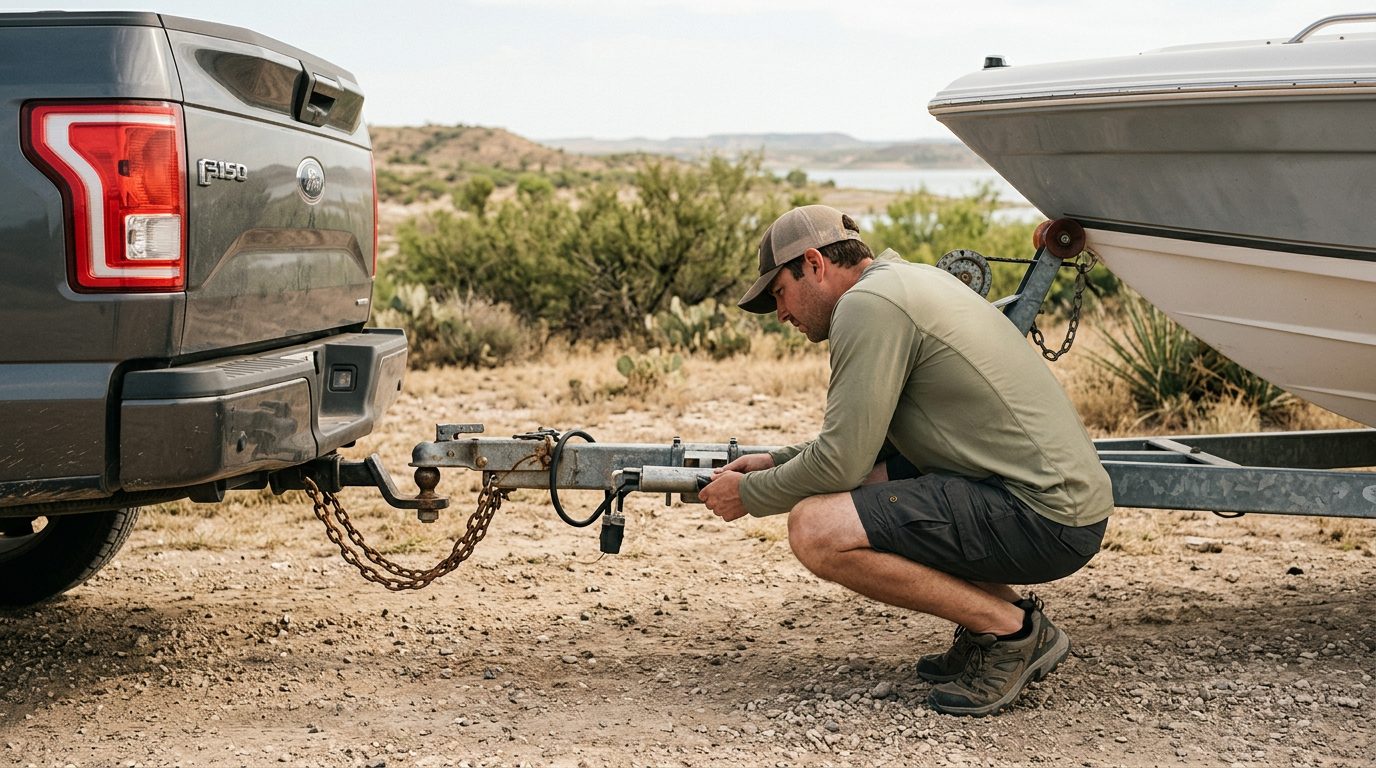
A man crouching down to secure a boat trailer hitch connected to a grey Ford F-150 truck outdoors. (Representative image for illustration purposes only. Actual vehicle may vary based on trim and configuration.)

Protect Your Transmission While Towing: Large Boat Towing Guide

Why Is a Supplemental Transmission Cooler Recommended for Towing to Lake Amistad? A supplemental transmission cooler lowers fluid operating temperatures by up to 50 degrees Fahrenheit, preventing fluid oxidation and thermal breakdown while pulling heavy boat trailers in high summer heat. When hauling heavy loads up steep launch ramps around Lake Amistad, an auxiliary cooler protects internal clutches and valves from catastrophic thermal failure. As a Service Director with over a decade of hands-on experience in fixed operations, I see what heavy trailering does to stock automatic transmissions during South Texas summers. Automatic transmission fluid breaks down rapidly when temperatures exceed 220 degrees. Pulling a 5,000-lb pontoon or fiberglass bass boat against headwinds pushes factory fluid past its normal thermal limits. Installing a dedicated heat exchanger ensures your EcoBoost® engine and automatic transmission maintain safe operating hydraulic pressure under sustained load. Before hitching up for your next trip, check that your transmission fluid is clear red and free of a burnt odor. If you want our service team to test your cooling system pressure or inspect fluid condition, give us a quick call or stop by our Del Rio service center location on Veterans Blvd. Table of Contents What Towing Capacity Is Required to Safely Haul a Boat to Lake Amistad? What Are Texas Legal Trailer Brake Requirements When Towing a Boat? Surge Brakes vs. Electric-Over-Hydraulic Brakes: Which Is Best for Boat Trailers? Can You Tow a Heavy Boat Without a Factory Tow Package? Why Schedule a Professional Pre-Towing Inspection Before Your Boat Trip? What Towing Capacity Is Required to Safely Haul a Boat to Lake Amistad? Safely towing a boat requires a vehicle rated for at least 10% to 20% above the combined gross weight of the boat, trailer, fuel, and onboard equipment. Most medium-sized pontoon and fiberglass bass boats weigh between 3,500 lbs and 6,000 lbs fully loaded, requiring a tow vehicle with a minimum towing capacity of 6,000 lbs to 7,500 lbs to maintain steering control and braking stability. Calculating total weight requires accounting for more than dry hull figures on a spec sheet. Gasoline weighs roughly 6.1 lbs per gallon, and adding full fuel tanks, trolling batteries, fresh water, anchors, fishing gear, and coolers easily adds 500 lbs to 1,000 lbs beyond the base trailer weight. Tongue weight is another critical factor; your setup must maintain between 7% and 15% of the total loaded trailer weight on the hitch ball. Too little tongue weight triggers dangerous trailer sway at highway speeds, while excessive tongue weight overloads the rear axle and reduces front steering traction. The highway trip across Uvalde features rolling terrain that demands consistent engine torque and proper load distribution across every axle. Vehicles like the Ford F-150 offer up to 13,500 lbs of maximum towing capacity when properly equipped, providing plenty of reserve power and thermal safety margin for long lake trips. What Are Texas Legal Trailer Brake Requirements When Towing a Boat? Texas state law mandates independent braking systems on any trailer with a gross weight exceeding 4,500 lbs. Additionally, the trailer brake system must feature an automatic breakaway mechanism capable of applying the brakes and bringing the trailer to a complete stop if it detaches from the tow vehicle. Maintaining legal and functional trailer brakes is critical when hauling heavy watercraft on public roads. Under Texas regulations, passenger cars and light trucks towing trailers must also use two properly rated safety chains crossed beneath the trailer tongue. Crossing the chains creates a cradle that catches the coupler if it accidentally unlatches from the hitch ball. Before departing, visually inspect trailer brake shoes, drums, hydraulic lines, and electrical connections to ensure full operation. You can easily schedule a service appointment online to have our technicians inspect your brake linings, check hub seals, and test your trailer brake controller before heading out. Surge Brakes vs. Electric-Over-Hydraulic Brakes: Which Is Best for Boat Trailers? Electric-over-hydraulic (EOH) brakes provide superior stopping power, faster response times, and cab-controlled adjustment for heavy boat trailers, whereas mechanical surge brakes offer reliable, self-contained stopping power that requires no in-cab controller and withstands repeated water submersion during ramp launches. Surge brakes operate mechanically using the trailer's forward momentum against the hitch ball. When the tow vehicle slows, kinetic force compresses a hydraulic master cylinder inside the trailer tongue, pressurizing the brake lines to slow the trailer wheels. This self-contained design makes surge systems popular on light-to-medium boat trailers because there are no electric magnets inside the brake drums to short out when backing into water. However, surge brakes cannot be manually activated from the driver's seat and can delay response times on downhill grades. EOH systems pair an electric brake controller inside the vehicle cab with an onboard electric hydraulic pump mounted on the trailer frame. Pressing the vehicle brake pedal instantly signals the hydraulic pump to actuate heavy-duty disc brakes. EOH systems provide proportional stopping power and allow drivers to manually trigger trailer braking to control sway. For boat setups over 5,000 lbs, EOH brakes combined with an integrated Ford trailer brake controller deliver maximum safety and control. Can You Tow a Heavy Boat Without a Factory Tow Package? Towing a heavy boat without a factory tow package is possible only if you install properly rated aftermarket upgrades, including a Class III or Class IV hitch receiver, auxiliary transmission cooling, a multi-pin electrical harness, and a trailer brake controller. Factory tow packages bundle essential hardware engineered to handle heavy tongue weights and engine heat under continuous strain. Beyond a frame-mounted receiver hitch, factory-equipped trucks include upgraded engine cooling fans, heavy-duty radiators, transmission fluid heat exchangers, vehicle wiring harnesses, and recalibrated shift software. Attempting to pull a 5,000-lb boat on a standard bumper or light-duty vehicle without these cooling and electrical upgrades risks severe transmission overheating and brake fatigue. If your vehicle lacked a factory package from the line, installing an auxiliary transmission cooler and a heavy-duty wiring harness helps close the performance gap. Utilizing built-in tow features like Ford Tow/Haul mode changes transmission shift timing to hold lower gears longer on climbs and provide engine braking during steep descents, reducing heat buildup in your vehicle's service brakes. Why Schedule a Professional Pre-Towing Inspection Before Your Boat Trip? A professional pre-towing inspection identifies hidden safety hazards such as dry-rotted tire sidewalls, contaminated wheel bearing grease, oxidized brake fluid, and weak electrical grounds before they cause highway breakdowns or ramp failures. Boat trailers undergo severe wear cycles compared to standard utility trailers. Repeatedly backing hot wheel hubs into cold lake water creates a vacuum inside the hub cavity, drawing water past rubber grease seals. Over time, water contamination breaks down bearing grease, leading to bearing overheating, axle scoring, and catastrophic wheel detachment on the highway. Professional technicians remove hub dust caps, inspect grease condition, pack bearings with marine-grade grease, check tire pressure on all tires including the spare, and verify electrical continuity across all tail lights and brake circuits. Our technicians examine tow vehicle hitches, cooling systems, brake linings, and electrical connections to keep your trip safe and worry-free. If you want complete peace of mind before your next outing, give our team a quick call or get directions to our service department to schedule a comprehensive pre-towing check. © 2026 Cecil Atkission Ford Del Rio. All rights reserved.
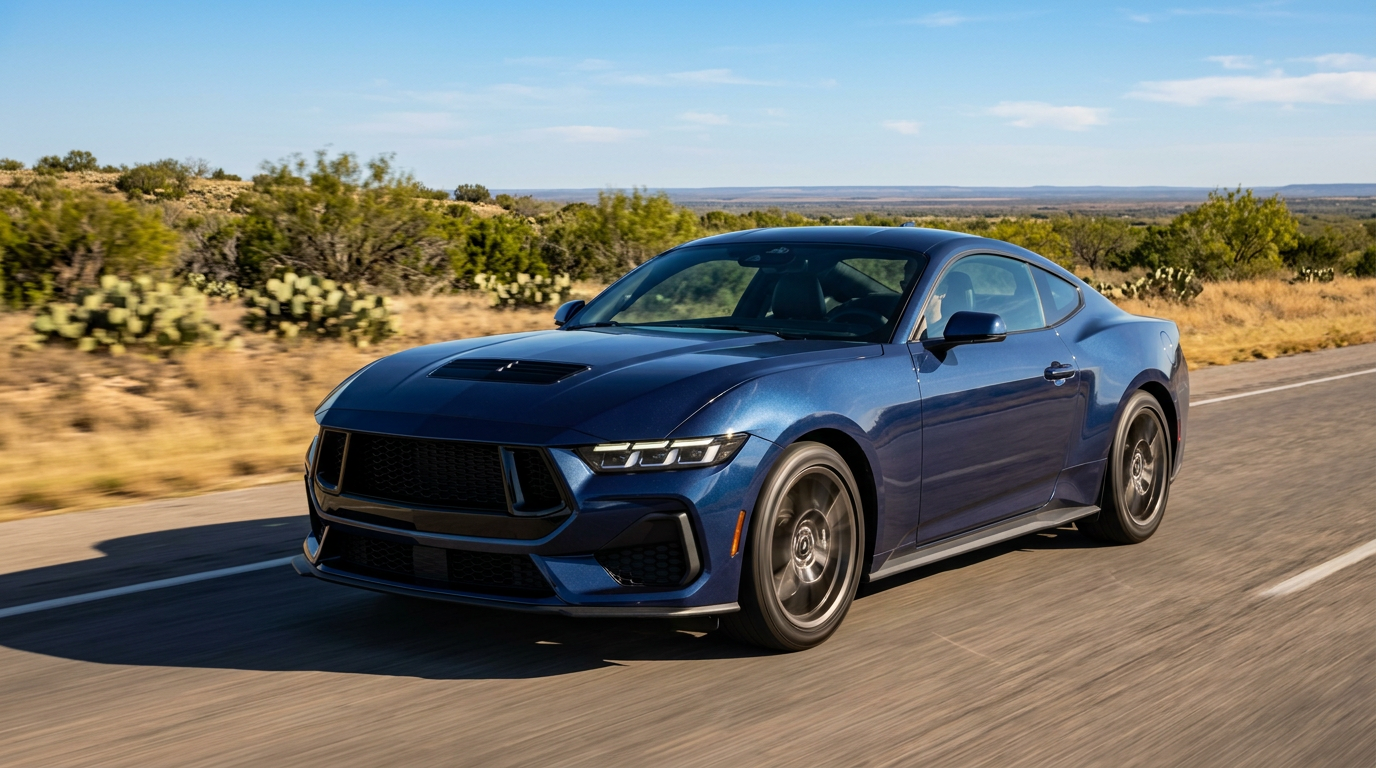
A metallic blue 2024 Ford Mustang coupe driving along a paved road in a desert landscape. (Representative image for illustration purposes only. Actual vehicle may vary based on trim and configuration.)

Why the 2026 Mustang EcoBoost Is Your Ultimate Daily Driver Powerhouse

For most daily commuters, the 2026 Ford Mustang EcoBoost Fastback offers strong daily drivability thanks to its EPA-estimated 22 mpg city / 33 mpg highway efficiency, lighter front-end handling, and starting MSRP of $32,995. While the Mustang GT Fastback delivers exhilarating performance with its 480 hp V8, its higher fuel consumption and firmer suspension may make the turbocharged 4-cylinder EcoBoost a better fit for some everyday driving needs. Balancing raw performance with practical commuting needs comes down to how you plan to use your sports car every day. The Mustang EcoBoost delivers plenty of punch for passing on open highways while keeping fuel stop costs low. Its lighter curb weight over the front axle gives it nimble steering response through tight city streets and busy parking lots. Our team frequently observes that shoppers test-driving both models around town are pleasantly surprised by how quickly the EcoBoost turbo engine builds low-end torque. You get effortless acceleration away from traffic lights without needing to rev the engine high. Additionally, standard features like dual-zone automatic climate control, a 13.2-inch center touchscreen, and comfortable cloth bucket seats ensure your daily commute stays enjoyable in any weather. If your daily route involves stop-and-go city traffic around Del Rio, the EcoBoost model's standard 10-speed automatic transmission provides smooth, predictable gear changes that reduce driver fatigue. Drivers who prioritize maximum horsepower, dual exhaust roar, and track-ready capability may still lean toward the Mustang GT, but for pure daily convenience and sensible ownership costs, the EcoBoost leads the lineup. To compare both powertrains in person, visit our Del Rio showroom address today or give our sales team a quick call at (830) 320-3106 to set up a test drive tailored to your schedule. Table of Contents What Are the Engine Specs and Performance Differences Between the EcoBoost and GT? What Is the Starting Price Difference and Standard Feature Gap Between Mustang Trims? How Does Mustang EcoBoost Fuel Economy Compare to the GT on Highways? Does MagneRide Suspension and Heat Management Make the GT Daily-Drive Ready? Frequently Asked Questions About 2026 Ford Mustang Daily Ownership Find Your 2026 Ford Mustang at Cecil Atkission Ford What Are the Engine Specs and Performance Differences Between the EcoBoost and GT? The 2026 Ford Mustang EcoBoost features a 2.3L EcoBoost 4-cylinder engine producing 315 hp and 350 lb-ft of torque, while the Mustang GT upgrades to a 5.0L Coyote V8 engine generating 480 hp and 415 lb-ft of torque. This gives the GT a significant advantage in raw horsepower, while the EcoBoost offers a lighter, more agile feel behind the wheel. Understanding the mechanical differences between these two iconic American sports cars helps clarify how they behave in real-world driving conditions: 2026 Mustang EcoBoost Powertrain: Engine: 2.3L EcoBoost 4-cylinder engine with turbocharging Horsepower: 315 hp @ 5,000 RPM Torque: 350 lb-ft @ 3,000 RPM Transmission: 10-speed automatic transmission with paddle shifters Drivetrain: Rear-wheel drive Acceleration: 0 to 60 mph in roughly 4.9 seconds 2026 Mustang GT Powertrain: Engine: 5.0L Coyote V8 engine naturally aspirated Horsepower: 480 hp (up to 486 hp with optional active valve exhaust) Torque: 415 lb-ft (up to 418 lb-ft with active exhaust) Transmission: Standard 6-speed manual transmission with rev-matching or optional 10-speed automatic transmission Drivetrain: Rear-wheel drive Acceleration: 0 to 60 mph in approximately 4.2 seconds with the automatic transmission Because the EcoBoost engine weighs nearly 200 pounds less over the front axle than the V8, it turns into corners with crisp precision and light steering effort. The GT responds with muscle-car thrust, delivering immediate throttle response and a deep exhaust note that enthusiasts love. To see which performance character matches your driving style, feel free to explore our new vehicle inventory to check out current arrivals on our lot. Engine & Performance Powertrain specs by trim Feature Dark Horse Dark Horse SC EcoBoost Convertible EcoBoost Fastback EcoBoost Premium Convertible EcoBoost Premium Fastback Engine 5L 5L 2.3L 2.3L 2.3L 2.3L Horsepower 500 hp 796 hp 315 hp 315 hp 315 hp 315 hp Torque 418 lb-ft 660 lb-ft 350 lb-ft 350 lb-ft 350 lb-ft 350 lb-ft Transmission automatic 10-speed automatic 7-speed automatic 10-speed automatic 10-speed automatic 10-speed automatic 10-speed Drivetrain Rear-wheel drive Rear-wheel drive Rear-wheel drive Rear-wheel drive Rear-wheel drive Rear-wheel drive Engine & Performance (continued) Feature GT Fastback GT Premium Convertible GT Premium Fastback Engine 5L 5L 5L Horsepower 480 hp 480 hp 480 hp Torque 415 lb-ft 415 lb-ft 415 lb-ft Transmission manual 6-speed manual 6-speed manual 6-speed Drivetrain Rear-wheel drive Rear-wheel drive Rear-wheel drive What Is the Starting Price Difference and Standard Feature Gap Between Mustang Trims? The starting price difference between the base 2026 Ford Mustang EcoBoost Fastback ( $32,995 MSRP) and the base Mustang GT Fastback ( $46,800 MSRP) is $13,805. That price gap reflects the larger V8 engine, upgraded braking systems, heavy-duty suspension tuning, and additional performance hardware standard on the GT trim. When reviewing the full lineup, price steps reflect body styles, transmission choices, and equipment packages: Mustang EcoBoost Fastback: Starting MSRP of $32,995 Mustang EcoBoost Premium Fastback: Starting MSRP of $36,345 Mustang EcoBoost Convertible: Starting MSRP of $40,440 Mustang EcoBoost Premium Convertible: Starting MSRP of $41,845 Mustang GT Fastback: Starting MSRP of $46,800 Mustang GT Premium Fastback: Starting MSRP of $51,080 Mustang GT Premium Convertible: Starting MSRP of $56,580 Mustang Dark Horse: Starting MSRP of $63,080 The $13,805 step up from a base EcoBoost to a base GT buys more than just extra cylinder count. Standard upgrades included on the Mustang GT consist of: The 5.0L Coyote V8 engine delivering 480 hp A rev-matching 6-speed manual transmission with short-throw shifting Larger 4-wheel disc performance brakes for enhanced stopping power A functional hood cooling vent to draw heat out of the engine bay Dual exhaust with quad chrome tips for classic V8 sound Heavy-duty front and rear suspension components engineered for cornering stability For drivers who want modern style, advanced digital displays, and spirited performance while keeping overall costs in check, the EcoBoost provides exceptional value. If you want to compare model configurations or browse trade-in options, check out our new Mustang inventory selection or browse our selection of pre-owned vehicles to view available models today. Pricing Pricing by trim. Destination Charge of 1995 is not included in the MSRP. Trim Base MSRP Dark Horse $63,080 Dark Horse SC $103,490 EcoBoost Convertible $40,440 EcoBoost Fastback $32,995 EcoBoost Premium Convertible $41,845 EcoBoost Premium Fastback $36,345 GT Fastback $46,800 GT Premium Convertible $56,580 GT Premium Fastback $51,080 How Does Mustang EcoBoost Fuel Economy Compare to the GT on Highways? The 2026 Ford Mustang EcoBoost Fastback delivers an EPA-estimated 22 mpg city / 33 mpg highway / 26 mpg combined, easily outperforming the Mustang GT automatic, which earns an EPA-estimated 16 mpg city / 24 mpg highway / 19 mpg combined. On long highway trips, the EcoBoost saves significant fuel costs and offers greater driving range between fill-ups. With a 16-gallon fuel tank capacity standard across both models, fuel economy ratings directly translate into highway cruising distance: Mustang EcoBoost Highway Cruising Range: Over 520 miles per tank on open highways ( 33 mpg highway) Mustang GT Highway Cruising Range: Approximately 380 miles per tank on open highways ( 24 mpg highway) For drivers making regular long-distance trips along US-90 toward Uvalde, that 140-mile range difference means fewer fuel stops and lower weekly operating expenses. The 2.3-liter turbocharged engine relies on direct injection and efficient gearing from its 10-speed automatic transmission to keep engine RPMs low at cruising speeds. While the V8-powered GT delivers rapid passing power, its larger displacement naturally burns more fuel whether cruising or accelerating. Choosing the EcoBoost keeps your long-distance travel affordable without giving up classic Mustang styling or highway passing capability. To keep whichever powertrain you choose running at peak efficiency, you can easily schedule routine maintenance with our service center online. Fuel Economy Fuel economy and range by trim Trim MPG Dark Horse 14 city / 22 hwy / 17 combined Dark Horse SC 14 city / 22 hwy / 17 combined EcoBoost Convertible 22 city / 33 hwy / 26 combined EcoBoost Fastback 22 city / 33 hwy / 26 combined EcoBoost Premium Convertible 22 city / 33 hwy / 26 combined EcoBoost Premium Fastback 22 city / 33 hwy / 26 combined GT Fastback 15 city / 23 hwy / 18 combined GT Premium Convertible 15 city / 23 hwy / 18 combined GT Premium Fastback 15 city / 23 hwy / 18 combined Does MagneRide Suspension and Heat Management Make the GT Daily-Drive Ready? Yes, the optional MagneRide Damping System makes the Mustang GT exceptionally comfortable for daily driving by continually adjusting shock absorber stiffness thousands of times per second to smooth out rough road surfaces. Additionally, factory heavy-duty radiators and engine bay venting manage heat generated by the 5.0L Coyote V8 engine during hot summer idling. Evaluating ride quality and thermal performance helps explain how the GT handles demanding daily driving conditions: MagneRide Damping System Capabilities: Comfort Mode: Softens shock valving to absorb potholes, expansion joints, and uneven pavement during daily commutes. Sport & Track Modes: Automatically firms up dampening rates to eliminate body roll during aggressive cornering or track sessions. Real-Time Adjustments: Sensors monitor suspension movement and steering inputs to adjust damper fluid viscosity in milliseconds. Summer Traffic Heat Management: The 5.0L Coyote V8 engine naturally produces more ambient heat under the hood during stop-and-go driving in hot weather. Functional hood heat extraction vents route hot air out of the engine compartment to maintain optimal operating temperatures. Factory high-capacity cooling fans and heavy-duty radiators keep coolant temperatures stable, even when idling in high ambient heat. While the EcoBoost runs cooler under hood temperatures and features softer standard suspension tuning, a GT equipped with MagneRide offers an impressively composed ride for drivers who want V8 power for daily transportation. If you are considering upgrading your current car to a new Mustang, you can value your trade-in online to see what your current car is worth. Frequently Asked Questions About 2026 Ford Mustang Daily Ownership Q: Does the 2026 Mustang EcoBoost require premium gasoline for daily driving? The 2026 Ford Mustang EcoBoost achieves its peak factory performance rating of 315 hp and 350 lb-ft of torque on 93-octane fuel. However, its engine management system safely accepts 87-octane regular unleaded gasoline for daily commuting with a minor reduction in overall horsepower. Q: Can you get a manual transmission on the 2026 Mustang EcoBoost? No, the 2026 Mustang EcoBoost is equipped exclusively with a 10-speed automatic transmission featuring steering wheel paddle shifters. Buyers who prefer a 6-speed manual transmission with rev-matching must step up to the Mustang GT or Dark Horse series. Q: How much cargo space does the 2026 Ford Mustang Fastback offer for daily errands? The Mustang Fastback coupe provides about 13 cubic feet of trunk cargo space, which easily accommodates golf bags, luggage, or weekly grocery runs. Standard 50/50 split-folding rear seatbacks fold forward to expand storage for longer items. Q: What driver-assist safety features come standard on the 2026 Mustang? Every 2026 Mustang comes standard with Ford Co-Pilot360 technology. Key features include Blind Spot Information System (BLIS) with Cross-Traffic Alert, Lane-Keeping System, Pre-Collision Assist with Automatic Emergency Braking, and Rear Parking Sensors for hassle-free daily parking. Q: Does the 2026 Mustang include wireless smartphone integration? Yes, every 2026 Mustang features a 13.2-inch center display powered by SYNC 4 software. It includes wireless Apple CarPlay and Android Auto compatibility, a 12.4-inch digital instrument cluster, and one year of included Ford Connectivity Package services. If you have additional questions regarding auto financing or payment options, you can contact our finance center for current information. Find Your 2026 Ford Mustang at Cecil Atkission Ford Choosing between the fuel-efficient 2026 Ford Mustang EcoBoost and the muscle-bound Mustang GT comes down to your daily driving priorities, performance expectations, and monthly ownership budget. Whether you value the EcoBoost model's 33 mpg highway economy or the GT model's thunderous 480 hp V8 rumble, both deliver iconic design, modern interior technology, and proven Ford reliability. Our sales team is ready to answer your questions, walk you through available options, and help you choose the exact trim that fits your daily commute. To take the next step, visit our dealership at 2700 Veterans Blvd or call our team directly at (830) 320-3106 today to experience the 2026 Mustang lineup firsthand. © 2026 Cecil Atkission Ford Del Rio. All rights reserved. Vehicle specification data © JATO Dynamics Limited.
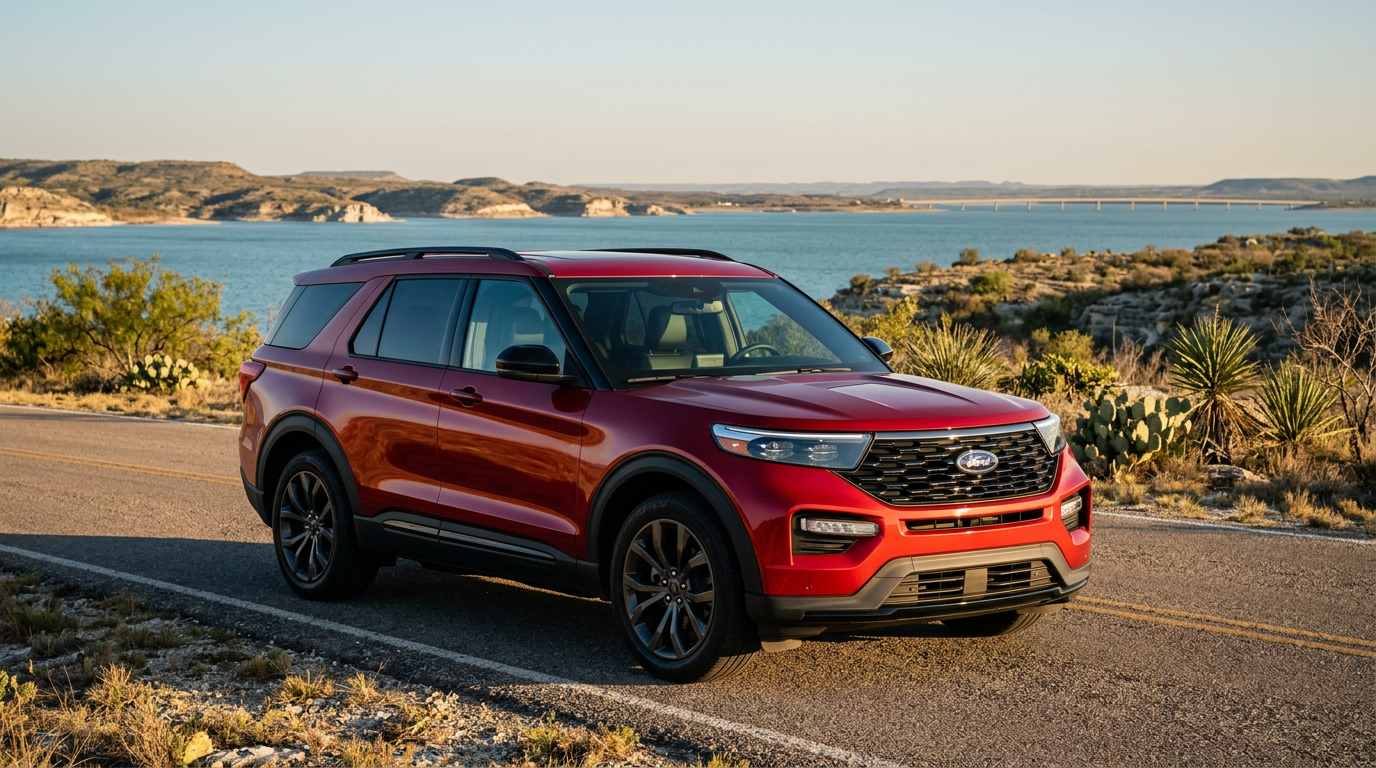
Red Ford Explorer SUV parked on a paved road overlooking a large blue lake in a desert landscape. (Representative image for illustration purposes only. Actual vehicle may vary based on trim and configuration.)

Discover the 2027 Ford Explorer’s Bold New Colors and Upgraded Security Features

The 2027 Ford Explorer carries forward the major redesign introduced for the recent model year rather than undergoing a complete ground-up overhaul. It retains updated exterior styling, a refined dashboard layout, standard digital displays, and proven powertrain choices while introducing fresh exterior colors such as Avalanche Gray and Ruby Red Metallic, along with standard Ford Security Package coverage for one year. For SUV shoppers in Del Rio needing a dependable family vehicle that handles both daily neighborhood errands and weekend towing out to Amistad Reservoir, the 2027 model year builds on a strong foundation. The latest design brings a bold front grille, distinctive exterior LED lighting, and streamlined cabin controls centered around a prominent center touchscreen. Ford focused this model year on refining tech features, expanding color choices, and enhancing vehicle security features across the lineup. Because the previous model year introduced major structural and interior cabin overhauls, the 2027 Explorer offers proven mechanical components that have already demonstrated real-world durability. Underneath the sculpted hood, the engineering setup remains focused on balanced power, comfortable seating for up to seven passengers, and practical utility. You can view our new Ford vehicle inventory online to see how the latest model year looks in person, or reach our Del Rio showroom address by giving our team a quick call today. Table of Contents What Updates and New Features Does the 2027 Ford Explorer Offer? What Trim Levels, Engine Specs, and MSRP Figures Define the 2027 Explorer Lineup? How Does the 2027 Ford Explorer Maximum Towing Capacity Compare to Highlander and Pilot? How Does Ford BlueCruise Hands-Free Driving Work on Eligible Highways? Common Questions About the 2027 Ford Explorer Explore the 2027 Ford Explorer Lineup at Cecil Atkission Ford What Updates and New Features Does the 2027 Ford Explorer Offer? The 2027 Ford Explorer introduces notable cosmetic and technology updates, including new exterior paint options, expanded feature availability across trims, and standard security software integration. Key changes include Avalanche Gray and Ruby Red Metallic exterior paint colors, a complimentary one-year subscription to the Ford Security Package, and wider access to hands-free driver-assist technology on upper trim levels. Inside the cabin, every 2027 model comes equipped with the Ford Digital Experience software interface. This system integrates built-in Google Maps navigation, voice-activated controls through Google Assistant, and seamless wireless Apple CarPlay and Android Auto connectivity. The interface displays across a standard 13.2-inch touchscreen paired with a 12.3-inch digital instrument cluster, giving drivers clear vehicle information and simple touch controls. For buyers evaluating appearance packages, the 2027 model year offers the Sinister Package on the performance-minded ST trim. This package adds 21-inch Gloss Black-painted aluminum wheels, darkened exterior badging, and unique cabin trim accents. Additional updates focus on interior comfort, offering available multicontour front seating with massage functions, customizable ambient interior lighting, and durable ActiveX synthetic leather seating surfaces built to withstand heavy family use. New Paint Colors: Avalanche Gray and Ruby Red Metallic expand the exterior color palette. Standard Security: One year of Ford Security Package coverage included from the original warranty start date. Digital Interface: Standard Ford Digital Experience with a 13.2-inch touchscreen and native Google app integration. Appearance Upgrades: Available Sinister Package for ST models featuring blacked-out exterior accents and 21-inch black wheels. If you are deciding between a brand-new model and an earlier version, exploring our new Ford Explorer selection alongside our solid lineup of pre-owned inventory makes it easy to compare features and interior layouts side by side. What Trim Levels, Engine Specs, and MSRP Figures Define the 2027 Explorer Lineup? With six trim levels available, the 2027 Ford Explorer caters to a wide range of drivers, from families needing space to adventurers seeking rugged performance. The entry-level Active RWD 100A starts at a base MSRP of $38,465 (plus a $1,795 destination charge), while stepping up to the athletic ST-LINE RWD starts at $44,200. The off-road-oriented Tremor 4WD starts at $49,200, the refined Platinum starts at $50,660, and the performance-tuned ST starts at $53,660. Powertrain options match the personality of each trim level. Most models come standard with a 2.3L EcoBoost turbocharged four-cylinder engine generating 300 hp and 310 lb-ft of torque, paired with a smooth SelectShift 10-speed automatic transmission. For drivers seeking greater passing power, the ST trim features a twin-turbocharged 3.0L EcoBoost V6 producing 400 hp and 415 lb-ft of torque. Rear-wheel drive comes standard on several trims, while intelligent four-wheel drive is available across the lineup and standard on Tremor models. Trim Level Engine & Drivetrain Horsepower & Torque Key Focus Features Active 2.3L EcoBoost (RWD / 4WD) 300 hp / 310 lb-ft 13.2-inch touchscreen, tri-zone climate control, cloth seating ST-Line 2.3L EcoBoost (RWD / 4WD) 300 hp / 310 lb-ft Sport exterior styling, ActiveX seating, available Ford BlueCruise Tremor 2.3L EcoBoost (4WD standard) 300 hp / 310 lb-ft Off-road suspension, Torsen limited-slip rear axle, steel skid plates Platinum 2.3L EcoBoost or 3.0L EcoBoost V6 300 hp or 400 hp Leather seating, ambient lighting, available Platinum Ultimate Package ST 3.0L EcoBoost V6 (RWD / 4WD) 400 hp / 415 lb-ft Sport-tuned suspension, 21-inch wheels, available Sinister Package Choosing between the entry-level Active and the sportier ST-Line comes down to styling and tech options. The ST-Line trim adds dark exterior trim, black grille accents, red interior accent stitching, and availability of hands-free highway driving. To keep whatever trim you choose running reliably for years down the road, scheduling routine maintenance with our factory-trained technicians at our service center ensures your SUV stays ready for workdays and weekend trips alike. How Does the 2027 Ford Explorer Maximum Towing Capacity Compare to Highlander and Pilot? When properly equipped with the available Class III Trailer Tow Package, the 2027 Ford Explorer delivers a maximum towing capacity of 5,000 lbs. This rating allows families to comfortably haul utility trailers, small travel campers, or personal watercraft. When compared directly to main competitors in the three-row family SUV class, the Ford Explorer offers a competitive towing and chassis setup. While the Toyota Highlander and Honda Pilot also offer up to 5,000 lbs of maximum towing capability on select configurations, the Explorer relies on a rear-wheel-drive platform architecture. This layout places the drive engine weight over the rear wheels when pulling heavy loads, providing stable traction on boat ramps and steady control on highway grades. 2027 Ford Explorer: Maximum 5,000 lbs towing capacity, supported by a standard 300 hp and 310 lb-ft torque output from its base 2.3L EcoBoost engine. Toyota Highlander: Maximum 5,000 lbs towing capacity on gas models, though hybrid variants are rated lower at 3,500 lbs. Honda Pilot: Maximum 5,000 lbs towing capacity on all-wheel-drive models, but front-wheel-drive versions are limited to 3,500 lbs. For drivers taking long highway trips through the rolling hills of Uvalde, the low-end torque provided by Ford's turbo engine lineup makes pulling loaded trailers efficient and controlled. The vehicle's integrated trailer sway control actively monitors trailer movement, tapping individual brakes to keep your load trailing straight. If you are considering upgrading your current family vehicle to a trailer-ready SUV, you can evaluate your vehicle's current value with our online trade-in appraisal tool before visiting our lot. Dimensions & Capacity Capacity and dimensions by trim Feature Active 4WD 100A Active 4WD 200A Active RWD 100A Active RWD 200A Platinum Platinum 4WD Seating 6 6 6 6 6 6 Cargo 16.3 cu ft 16.3 cu ft 16.3 cu ft 16.3 cu ft 16.3 cu ft 16.3 cu ft Curb weight 4,303 lbs 4,303 lbs 4,303 lbs 4,303 lbs 4,303 lbs 4,303 lbs Towing 5,000 lbs 5,000 lbs 5,000 lbs 5,000 lbs 5,000 lbs 5,000 lbs Payload 1,467 lbs 1,467 lbs 1,467 lbs 1,467 lbs 1,467 lbs 1,467 lbs Dimensions & Capacity (continued) Feature ST ST 4WD ST-LINE 4WD ST-LINE RWD Tremor 4WD Utility Police Interceptor 4x4 Seating 6 6 6 6 6 5 Cargo 16.3 cu ft 16.3 cu ft 16.3 cu ft 16.3 cu ft 16.3 cu ft 52.0 cu ft Curb weight 4,631 lbs 4,631 lbs 4,303 lbs 4,303 lbs 4,424 lbs 4,732 lbs Towing 5,000 lbs 5,000 lbs 5,000 lbs 5,000 lbs 5,000 lbs 3,500 lbs Payload 1,139 lbs 1,139 lbs 1,467 lbs 1,467 lbs 1,346 lbs 2,108 lbs How Does Ford BlueCruise Hands-Free Driving Work on Eligible Highways? Ford BlueCruise operates as a hands-free highway driving assist system that controls vehicle steering, braking, and lane positioning on pre-mapped sections of divided highways known as Hands-Free Blue Zones. The system builds upon adaptive cruise control and lane-centering technology, allowing drivers to remove their hands from the steering wheel while keeping their eyes focused on the road ahead. An infrared driver-facing camera mounted on the steering column monitors eye gaze and head position to verify driver awareness. If the camera detects the driver looking away from the road for an extended period, visual and audible alerts prompt the driver to resume active control. On qualified highways, Ford BlueCruise also includes Lane Change Assist, which executes automated lane changes when the driver taps the turn signal stalk, and In-Lane Repositioning, which subtly shifts the vehicle away from large semi-trucks in adjacent lanes. Activation: Ensure Adaptive Cruise Control and Lane-Keeping are switched on using the steering wheel controls while traveling on a designated Blue Zone highway. Engagement: Once the system confirms clear lane markings and driver attentiveness, the digital instrument cluster turns blue, indicating hands-free driving is active. Automated Adjustments: The system manages vehicle speed, maintains safe trailing distances, adjusts speed for highway curves, and performs lane adjustments smoothly. When local drivers visit our showroom to explore family SUVs, one of the questions our team hears most often is how hands-free highway driving functions on long road trips across Texas. Our team is happy to demonstrate how intuitive these driver-assist systems are during a test drive. You can connect with our finance department to learn more about current payment and financing information that fits your needs. Common Questions About the 2027 Ford Explorer Q: Does the 2027 Ford Explorer come standard with third-row seating? Yes, every 2027 Ford Explorer comes standard with three-row seating. Depending on the trim level and seating configuration, the Explorer accommodates six or seven passengers. Models equipped with second-row captain's chairs seat six, while models with a second-row bench seat accommodate seven. Q: What is the EPA-rated fuel economy for the 2027 Ford Explorer? When equipped with the standard 2.3L EcoBoost engine and four-wheel drive, the 2027 Ford Explorer delivers an EPA-estimated 20 city / 27 hwy MPG. Rear-wheel-drive configurations provide slightly higher highway efficiency during long-distance driving. Q: What warranty coverage comes with a new 2027 Ford Explorer? Every new 2027 Ford Explorer includes a 3-year/36,000-mile bumper-to-bumper warranty and a 5-year/60,000-mile powertrain warranty. Ford also includes 5 years or unlimited miles of corrosion coverage, backed by 24/7 Ford Roadside Assistance during the powertrain warranty period. Q: How much cargo space is available inside the 2027 Ford Explorer? The 2027 Explorer provides about 16 cubic feet of cargo volume behind the third-row seats. Folding the third row down expands cargo space significantly, while folding both the second and third rows yields a maximum cargo capacity of about 86 cubic feet. Q: What is the main interior difference between the Explorer Active and Platinum trims? The Active trim features comfortable cloth seating, tri-zone automatic climate control, and practical interior materials. The Platinum trim adds plush leather seating surfaces, heated and ventilated front seats, ambient lighting, and available multicontour front seats with built-in massage features. Pricing Pricing by trim. Destination fee of $1795 is not included in the MSRP Trim Base MSRP Active 4WD 100A $40,465 Active 4WD 200A $42,400 Active RWD 100A $38,465 Active RWD 200A $40,400 Platinum $50,660 Platinum 4WD $52,660 ST $53,660 ST 4WD $55,660 ST-LINE 4WD $46,200 ST-LINE RWD $44,200 Tremor 4WD $49,200 Utility Police Interceptor 4x4 $49,050 Explore the 2027 Ford Explorer Lineup at Cecil Atkission Ford The 2027 Ford Explorer delivers the durability, cabin space, and towing muscle that working families rely on every day. Whether you need an efficient daily commuter for school drop-offs or a rugged four-wheel-drive SUV ready for weekend outdoor trips, the Explorer lineup offers a trim built for your lifestyle. Our team at Cecil Atkission Ford Del Rio is proud to serve our community with helpful guidance, financing options, and maintenance services. We invite you to visit our dealership in Del Rio to explore the 2027 Explorer in person. Give our sales team (830) 320-3106 a call to schedule your test drive today and experience Ford reliability firsthand. © 2026 Cecil Atkission Ford Del Rio. All rights reserved. Vehicle specification data © JATO Dynamics Limited.