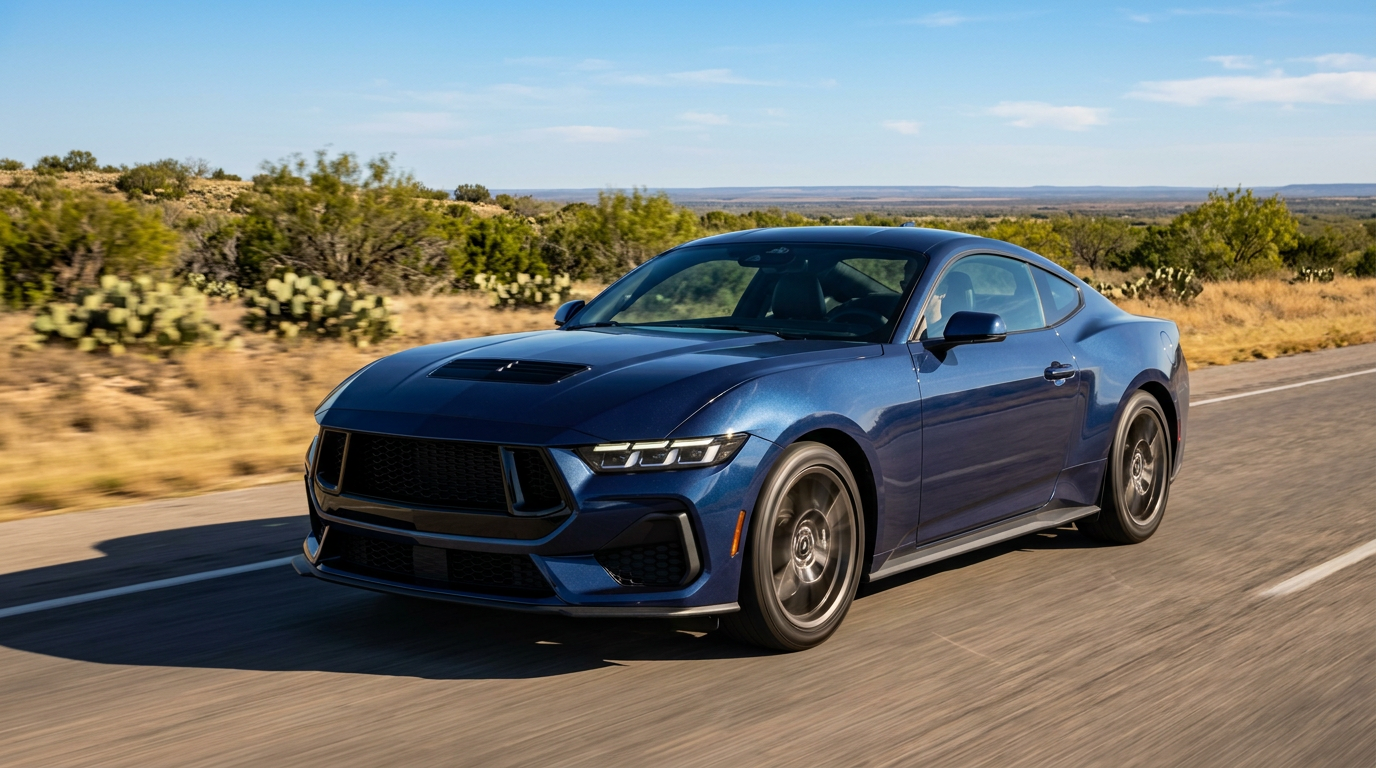
For most daily commuters, the 2026 Ford Mustang EcoBoost Fastback offers strong daily drivability thanks to its EPA-estimated 22 mpg city / 33 mpg highway efficiency, lighter front-end handling, and starting MSRP of $32,995. While the Mustang GT Fastback delivers exhilarating performance with its 480 hp V8, its higher fuel consumption and firmer suspension may make the turbocharged 4-cylinder EcoBoost a better fit for some everyday driving needs. Balancing raw performance with practical commuting needs comes down to how you plan to use your sports car every day. The Mustang EcoBoost delivers plenty of punch for passing on open highways while keeping fuel stop costs low. Its lighter curb weight over the front axle gives it nimble steering response through tight city streets and busy parking lots. Our team frequently observes that shoppers test-driving both models around town are pleasantly surprised by how quickly the EcoBoost turbo engine builds low-end torque. You get effortless acceleration away from traffic lights without needing to rev the engine high. Additionally, standard features like dual-zone automatic climate control, a 13.2-inch center touchscreen, and comfortable cloth bucket seats ensure your daily commute stays enjoyable in any weather. If your daily route involves stop-and-go city traffic around Del Rio, the EcoBoost model's standard 10-speed automatic transmission provides smooth, predictable gear changes that reduce driver fatigue. Drivers who prioritize maximum horsepower, dual exhaust roar, and track-ready capability may still lean toward the Mustang GT, but for pure daily convenience and sensible ownership costs, the EcoBoost leads the lineup. To compare both powertrains in person, visit our Del Rio showroom address today or give our sales team a quick call at (830) 320-3106 to set up a test drive tailored to your schedule. Table of Contents What Are the Engine Specs and Performance Differences Between the EcoBoost and GT? What Is the Starting Price Difference and Standard Feature Gap Between Mustang Trims? How Does Mustang EcoBoost Fuel Economy Compare to the GT on Highways? Does MagneRide Suspension and Heat Management Make the GT Daily-Drive Ready? Frequently Asked Questions About 2026 Ford Mustang Daily Ownership Find Your 2026 Ford Mustang at Cecil Atkission Ford What Are the Engine Specs and Performance Differences Between the EcoBoost and GT? The 2026 Ford Mustang EcoBoost features a 2.3L EcoBoost 4-cylinder engine producing 315 hp and 350 lb-ft of torque, while the Mustang GT upgrades to a 5.0L Coyote V8 engine generating 480 hp and 415 lb-ft of torque. This gives the GT a significant advantage in raw horsepower, while the EcoBoost offers a lighter, more agile feel behind the wheel. Understanding the mechanical differences between these two iconic American sports cars helps clarify how they behave in real-world driving conditions: 2026 Mustang EcoBoost Powertrain: Engine: 2.3L EcoBoost 4-cylinder engine with turbocharging Horsepower: 315 hp @ 5,000 RPM Torque: 350 lb-ft @ 3,000 RPM Transmission: 10-speed automatic transmission with paddle shifters Drivetrain: Rear-wheel drive Acceleration: 0 to 60 mph in roughly 4.9 seconds 2026 Mustang GT Powertrain: Engine: 5.0L Coyote V8 engine naturally aspirated Horsepower: 480 hp (up to 486 hp with optional active valve exhaust) Torque: 415 lb-ft (up to 418 lb-ft with active exhaust) Transmission: Standard 6-speed manual transmission with rev-matching or optional 10-speed automatic transmission Drivetrain: Rear-wheel drive Acceleration: 0 to 60 mph in approximately 4.2 seconds with the automatic transmission Because the EcoBoost engine weighs nearly 200 pounds less over the front axle than the V8, it turns into corners with crisp precision and light steering effort. The GT responds with muscle-car thrust, delivering immediate throttle response and a deep exhaust note that enthusiasts love. To see which performance character matches your driving style, feel free to explore our new vehicle inventory to check out current arrivals on our lot. Engine & Performance Powertrain specs by trim Feature Dark Horse Dark Horse SC EcoBoost Convertible EcoBoost Fastback EcoBoost Premium Convertible EcoBoost Premium Fastback Engine 5L 5L 2.3L 2.3L 2.3L 2.3L Horsepower 500 hp 796 hp 315 hp 315 hp 315 hp 315 hp Torque 418 lb-ft 660 lb-ft 350 lb-ft 350 lb-ft 350 lb-ft 350 lb-ft Transmission automatic 10-speed automatic 7-speed automatic 10-speed automatic 10-speed automatic 10-speed automatic 10-speed Drivetrain Rear-wheel drive Rear-wheel drive Rear-wheel drive Rear-wheel drive Rear-wheel drive Rear-wheel drive Engine & Performance (continued) Feature GT Fastback GT Premium Convertible GT Premium Fastback Engine 5L 5L 5L Horsepower 480 hp 480 hp 480 hp Torque 415 lb-ft 415 lb-ft 415 lb-ft Transmission manual 6-speed manual 6-speed manual 6-speed Drivetrain Rear-wheel drive Rear-wheel drive Rear-wheel drive What Is the Starting Price Difference and Standard Feature Gap Between Mustang Trims? The starting price difference between the base 2026 Ford Mustang EcoBoost Fastback ( $32,995 MSRP) and the base Mustang GT Fastback ( $46,800 MSRP) is $13,805. That price gap reflects the larger V8 engine, upgraded braking systems, heavy-duty suspension tuning, and additional performance hardware standard on the GT trim. When reviewing the full lineup, price steps reflect body styles, transmission choices, and equipment packages: Mustang EcoBoost Fastback: Starting MSRP of $32,995 Mustang EcoBoost Premium Fastback: Starting MSRP of $36,345 Mustang EcoBoost Convertible: Starting MSRP of $40,440 Mustang EcoBoost Premium Convertible: Starting MSRP of $41,845 Mustang GT Fastback: Starting MSRP of $46,800 Mustang GT Premium Fastback: Starting MSRP of $51,080 Mustang GT Premium Convertible: Starting MSRP of $56,580 Mustang Dark Horse: Starting MSRP of $63,080 The $13,805 step up from a base EcoBoost to a base GT buys more than just extra cylinder count. Standard upgrades included on the Mustang GT consist of: The 5.0L Coyote V8 engine delivering 480 hp A rev-matching 6-speed manual transmission with short-throw shifting Larger 4-wheel disc performance brakes for enhanced stopping power A functional hood cooling vent to draw heat out of the engine bay Dual exhaust with quad chrome tips for classic V8 sound Heavy-duty front and rear suspension components engineered for cornering stability For drivers who want modern style, advanced digital displays, and spirited performance while keeping overall costs in check, the EcoBoost provides exceptional value. If you want to compare model configurations or browse trade-in options, check out our new Mustang inventory selection or browse our selection of pre-owned vehicles to view available models today. Pricing Pricing by trim. Destination Charge of 1995 is not included in the MSRP. Trim Base MSRP Dark Horse $63,080 Dark Horse SC $103,490 EcoBoost Convertible $40,440 EcoBoost Fastback $32,995 EcoBoost Premium Convertible $41,845 EcoBoost Premium Fastback $36,345 GT Fastback $46,800 GT Premium Convertible $56,580 GT Premium Fastback $51,080 How Does Mustang EcoBoost Fuel Economy Compare to the GT on Highways? The 2026 Ford Mustang EcoBoost Fastback delivers an EPA-estimated 22 mpg city / 33 mpg highway / 26 mpg combined, easily outperforming the Mustang GT automatic, which earns an EPA-estimated 16 mpg city / 24 mpg highway / 19 mpg combined. On long highway trips, the EcoBoost saves significant fuel costs and offers greater driving range between fill-ups. With a 16-gallon fuel tank capacity standard across both models, fuel economy ratings directly translate into highway cruising distance: Mustang EcoBoost Highway Cruising Range: Over 520 miles per tank on open highways ( 33 mpg highway) Mustang GT Highway Cruising Range: Approximately 380 miles per tank on open highways ( 24 mpg highway) For drivers making regular long-distance trips along US-90 toward Uvalde, that 140-mile range difference means fewer fuel stops and lower weekly operating expenses. The 2.3-liter turbocharged engine relies on direct injection and efficient gearing from its 10-speed automatic transmission to keep engine RPMs low at cruising speeds. While the V8-powered GT delivers rapid passing power, its larger displacement naturally burns more fuel whether cruising or accelerating. Choosing the EcoBoost keeps your long-distance travel affordable without giving up classic Mustang styling or highway passing capability. To keep whichever powertrain you choose running at peak efficiency, you can easily schedule routine maintenance with our service center online. Fuel Economy Fuel economy and range by trim Trim MPG Dark Horse 14 city / 22 hwy / 17 combined Dark Horse SC 14 city / 22 hwy / 17 combined EcoBoost Convertible 22 city / 33 hwy / 26 combined EcoBoost Fastback 22 city / 33 hwy / 26 combined EcoBoost Premium Convertible 22 city / 33 hwy / 26 combined EcoBoost Premium Fastback 22 city / 33 hwy / 26 combined GT Fastback 15 city / 23 hwy / 18 combined GT Premium Convertible 15 city / 23 hwy / 18 combined GT Premium Fastback 15 city / 23 hwy / 18 combined Does MagneRide Suspension and Heat Management Make the GT Daily-Drive Ready? Yes, the optional MagneRide Damping System makes the Mustang GT exceptionally comfortable for daily driving by continually adjusting shock absorber stiffness thousands of times per second to smooth out rough road surfaces. Additionally, factory heavy-duty radiators and engine bay venting manage heat generated by the 5.0L Coyote V8 engine during hot summer idling. Evaluating ride quality and thermal performance helps explain how the GT handles demanding daily driving conditions: MagneRide Damping System Capabilities: Comfort Mode: Softens shock valving to absorb potholes, expansion joints, and uneven pavement during daily commutes. Sport & Track Modes: Automatically firms up dampening rates to eliminate body roll during aggressive cornering or track sessions. Real-Time Adjustments: Sensors monitor suspension movement and steering inputs to adjust damper fluid viscosity in milliseconds. Summer Traffic Heat Management: The 5.0L Coyote V8 engine naturally produces more ambient heat under the hood during stop-and-go driving in hot weather. Functional hood heat extraction vents route hot air out of the engine compartment to maintain optimal operating temperatures. Factory high-capacity cooling fans and heavy-duty radiators keep coolant temperatures stable, even when idling in high ambient heat. While the EcoBoost runs cooler under hood temperatures and features softer standard suspension tuning, a GT equipped with MagneRide offers an impressively composed ride for drivers who want V8 power for daily transportation. If you are considering upgrading your current car to a new Mustang, you can value your trade-in online to see what your current car is worth. Frequently Asked Questions About 2026 Ford Mustang Daily Ownership Q: Does the 2026 Mustang EcoBoost require premium gasoline for daily driving? The 2026 Ford Mustang EcoBoost achieves its peak factory performance rating of 315 hp and 350 lb-ft of torque on 93-octane fuel. However, its engine management system safely accepts 87-octane regular unleaded gasoline for daily commuting with a minor reduction in overall horsepower. Q: Can you get a manual transmission on the 2026 Mustang EcoBoost? No, the 2026 Mustang EcoBoost is equipped exclusively with a 10-speed automatic transmission featuring steering wheel paddle shifters. Buyers who prefer a 6-speed manual transmission with rev-matching must step up to the Mustang GT or Dark Horse series. Q: How much cargo space does the 2026 Ford Mustang Fastback offer for daily errands? The Mustang Fastback coupe provides about 13 cubic feet of trunk cargo space, which easily accommodates golf bags, luggage, or weekly grocery runs. Standard 50/50 split-folding rear seatbacks fold forward to expand storage for longer items. Q: What driver-assist safety features come standard on the 2026 Mustang? Every 2026 Mustang comes standard with Ford Co-Pilot360 technology. Key features include Blind Spot Information System (BLIS) with Cross-Traffic Alert, Lane-Keeping System, Pre-Collision Assist with Automatic Emergency Braking, and Rear Parking Sensors for hassle-free daily parking. Q: Does the 2026 Mustang include wireless smartphone integration? Yes, every 2026 Mustang features a 13.2-inch center display powered by SYNC 4 software. It includes wireless Apple CarPlay and Android Auto compatibility, a 12.4-inch digital instrument cluster, and one year of included Ford Connectivity Package services. If you have additional questions regarding auto financing or payment options, you can contact our finance center for current information. Find Your 2026 Ford Mustang at Cecil Atkission Ford Choosing between the fuel-efficient 2026 Ford Mustang EcoBoost and the muscle-bound Mustang GT comes down to your daily driving priorities, performance expectations, and monthly ownership budget. Whether you value the EcoBoost model's 33 mpg highway economy or the GT model's thunderous 480 hp V8 rumble, both deliver iconic design, modern interior technology, and proven Ford reliability. Our sales team is ready to answer your questions, walk you through available options, and help you choose the exact trim that fits your daily commute. To take the next step, visit our dealership at 2700 Veterans Blvd or call our team directly at (830) 320-3106 today to experience the 2026 Mustang lineup firsthand. © 2026 Cecil Atkission Ford Del Rio. All rights reserved. Vehicle specification data © JATO Dynamics Limited.
Protect Your Transmission While Towing: Large Boat Towing Guide
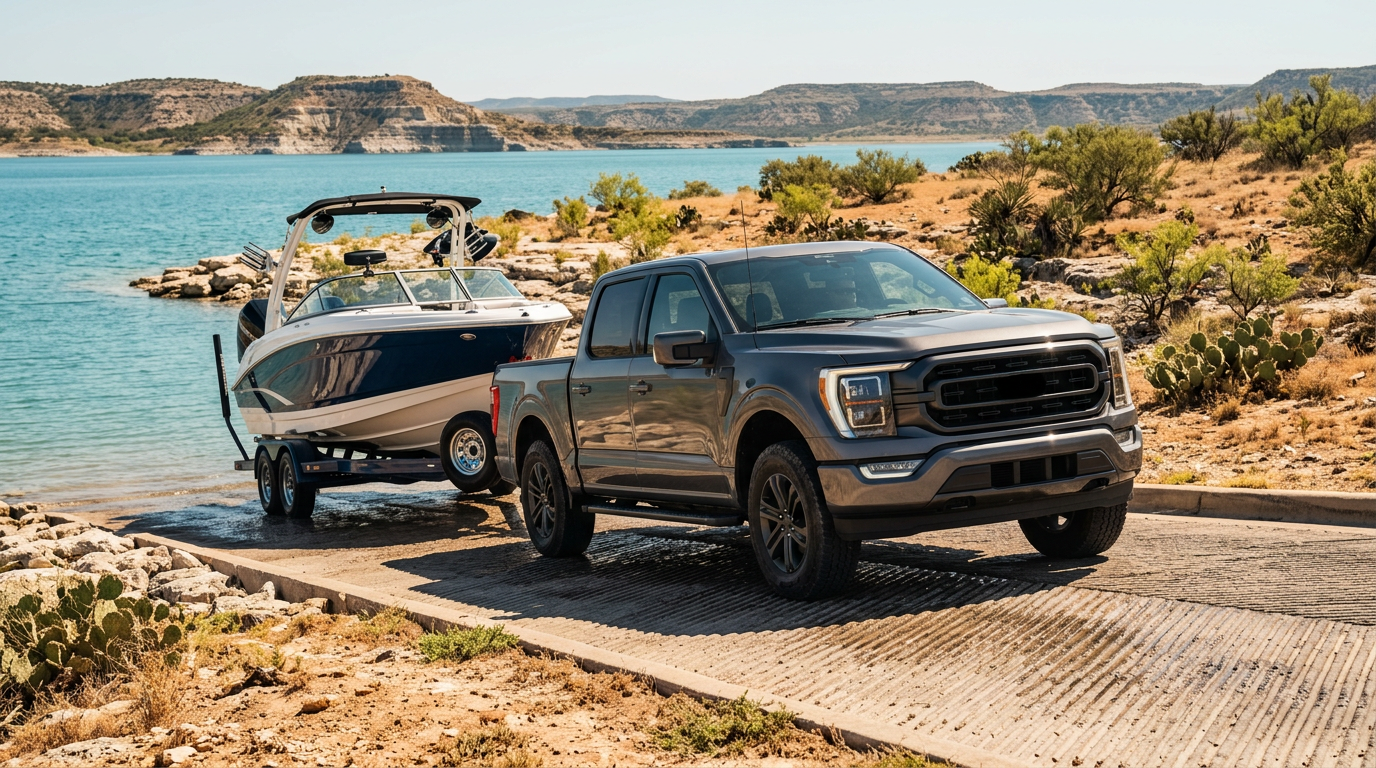
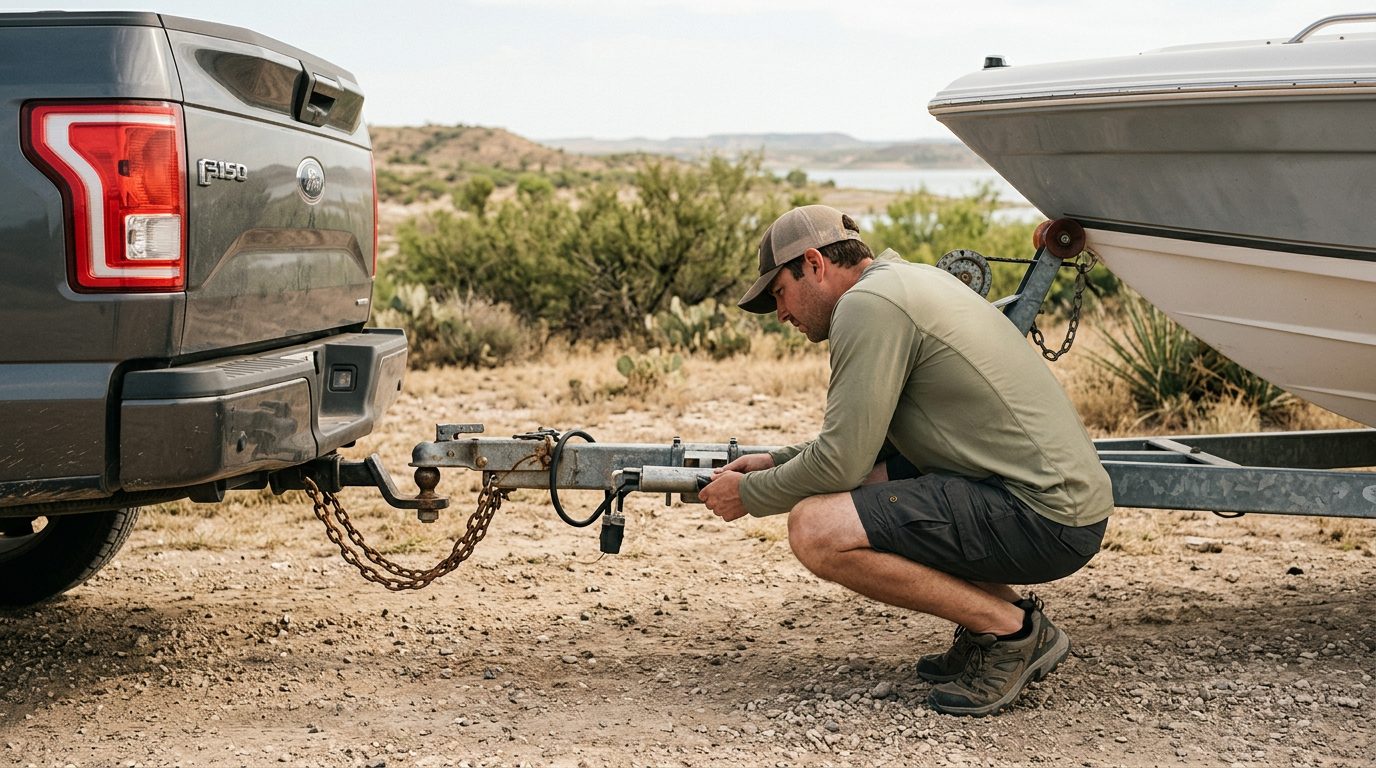
Why Is a Supplemental Transmission Cooler Recommended for Towing to Lake Amistad? A supplemental transmission cooler lowers fluid operating temperatures by up to 50 degrees Fahrenheit, preventing fluid oxidation and thermal breakdown while pulling heavy boat trailers in high summer heat. When hauling heavy loads up steep launch ramps around Lake Amistad, an auxiliary cooler protects internal clutches and valves from catastrophic thermal failure. As a Service Director with over a decade of hands-on experience in fixed operations, I see what heavy trailering does to stock automatic transmissions during South Texas summers. Automatic transmission fluid breaks down rapidly when temperatures exceed 220 degrees. Pulling a 5,000-lb pontoon or fiberglass bass boat against headwinds pushes factory fluid past its normal thermal limits. Installing a dedicated heat exchanger ensures your EcoBoost® engine and automatic transmission maintain safe operating hydraulic pressure under sustained load. Before hitching up for your next trip, check that your transmission fluid is clear red and free of a burnt odor. If you want our service team to test your cooling system pressure or inspect fluid condition, give us a quick call or stop by our Del Rio service center location on Veterans Blvd. Table of Contents What Towing Capacity Is Required to Safely Haul a Boat to Lake Amistad? What Are Texas Legal Trailer Brake Requirements When Towing a Boat? Surge Brakes vs. Electric-Over-Hydraulic Brakes: Which Is Best for Boat Trailers? Can You Tow a Heavy Boat Without a Factory Tow Package? Why Schedule a Professional Pre-Towing Inspection Before Your Boat Trip? What Towing Capacity Is Required to Safely Haul a Boat to Lake Amistad? Safely towing a boat requires a vehicle rated for at least 10% to 20% above the combined gross weight of the boat, trailer, fuel, and onboard equipment. Most medium-sized pontoon and fiberglass bass boats weigh between 3,500 lbs and 6,000 lbs fully loaded, requiring a tow vehicle with a minimum towing capacity of 6,000 lbs to 7,500 lbs to maintain steering control and braking stability. Calculating total weight requires accounting for more than dry hull figures on a spec sheet. Gasoline weighs roughly 6.1 lbs per gallon, and adding full fuel tanks, trolling batteries, fresh water, anchors, fishing gear, and coolers easily adds 500 lbs to 1,000 lbs beyond the base trailer weight. Tongue weight is another critical factor; your setup must maintain between 7% and 15% of the total loaded trailer weight on the hitch ball. Too little tongue weight triggers dangerous trailer sway at highway speeds, while excessive tongue weight overloads the rear axle and reduces front steering traction. The highway trip across Uvalde features rolling terrain that demands consistent engine torque and proper load distribution across every axle. Vehicles like the Ford F-150 offer up to 13,500 lbs of maximum towing capacity when properly equipped, providing plenty of reserve power and thermal safety margin for long lake trips. What Are Texas Legal Trailer Brake Requirements When Towing a Boat? Texas state law mandates independent braking systems on any trailer with a gross weight exceeding 4,500 lbs. Additionally, the trailer brake system must feature an automatic breakaway mechanism capable of applying the brakes and bringing the trailer to a complete stop if it detaches from the tow vehicle. Maintaining legal and functional trailer brakes is critical when hauling heavy watercraft on public roads. Under Texas regulations, passenger cars and light trucks towing trailers must also use two properly rated safety chains crossed beneath the trailer tongue. Crossing the chains creates a cradle that catches the coupler if it accidentally unlatches from the hitch ball. Before departing, visually inspect trailer brake shoes, drums, hydraulic lines, and electrical connections to ensure full operation. You can easily schedule a service appointment online to have our technicians inspect your brake linings, check hub seals, and test your trailer brake controller before heading out. Surge Brakes vs. Electric-Over-Hydraulic Brakes: Which Is Best for Boat Trailers? Electric-over-hydraulic (EOH) brakes provide superior stopping power, faster response times, and cab-controlled adjustment for heavy boat trailers, whereas mechanical surge brakes offer reliable, self-contained stopping power that requires no in-cab controller and withstands repeated water submersion during ramp launches. Surge brakes operate mechanically using the trailer's forward momentum against the hitch ball. When the tow vehicle slows, kinetic force compresses a hydraulic master cylinder inside the trailer tongue, pressurizing the brake lines to slow the trailer wheels. This self-contained design makes surge systems popular on light-to-medium boat trailers because there are no electric magnets inside the brake drums to short out when backing into water. However, surge brakes cannot be manually activated from the driver's seat and can delay response times on downhill grades. EOH systems pair an electric brake controller inside the vehicle cab with an onboard electric hydraulic pump mounted on the trailer frame. Pressing the vehicle brake pedal instantly signals the hydraulic pump to actuate heavy-duty disc brakes. EOH systems provide proportional stopping power and allow drivers to manually trigger trailer braking to control sway. For boat setups over 5,000 lbs, EOH brakes combined with an integrated Ford trailer brake controller deliver maximum safety and control. Can You Tow a Heavy Boat Without a Factory Tow Package? Towing a heavy boat without a factory tow package is possible only if you install properly rated aftermarket upgrades, including a Class III or Class IV hitch receiver, auxiliary transmission cooling, a multi-pin electrical harness, and a trailer brake controller. Factory tow packages bundle essential hardware engineered to handle heavy tongue weights and engine heat under continuous strain. Beyond a frame-mounted receiver hitch, factory-equipped trucks include upgraded engine cooling fans, heavy-duty radiators, transmission fluid heat exchangers, vehicle wiring harnesses, and recalibrated shift software. Attempting to pull a 5,000-lb boat on a standard bumper or light-duty vehicle without these cooling and electrical upgrades risks severe transmission overheating and brake fatigue. If your vehicle lacked a factory package from the line, installing an auxiliary transmission cooler and a heavy-duty wiring harness helps close the performance gap. Utilizing built-in tow features like Ford Tow/Haul mode changes transmission shift timing to hold lower gears longer on climbs and provide engine braking during steep descents, reducing heat buildup in your vehicle's service brakes. Why Schedule a Professional Pre-Towing Inspection Before Your Boat Trip? A professional pre-towing inspection identifies hidden safety hazards such as dry-rotted tire sidewalls, contaminated wheel bearing grease, oxidized brake fluid, and weak electrical grounds before they cause highway breakdowns or ramp failures. Boat trailers undergo severe wear cycles compared to standard utility trailers. Repeatedly backing hot wheel hubs into cold lake water creates a vacuum inside the hub cavity, drawing water past rubber grease seals. Over time, water contamination breaks down bearing grease, leading to bearing overheating, axle scoring, and catastrophic wheel detachment on the highway. Professional technicians remove hub dust caps, inspect grease condition, pack bearings with marine-grade grease, check tire pressure on all tires including the spare, and verify electrical continuity across all tail lights and brake circuits. Our technicians examine tow vehicle hitches, cooling systems, brake linings, and electrical connections to keep your trip safe and worry-free. If you want complete peace of mind before your next outing, give our team a quick call or get directions to our service department to schedule a comprehensive pre-towing check. © 2026 Cecil Atkission Ford Del Rio. All rights reserved.